SOT
    • Introduction
    • User manual
      • User interface
        • Deviations tab
        • Quick reactions tab
        • Registered actions tab
        • Sustainability assessments tab
      • Operate Deviation Processor module
        • Set up table columns
        • Deviations
        • Quick reactions
        • Registered actions
        • Sustainability assessments
    • Operations manual
      • Overview
      • System architecture and interfaces
      • System requirements
        • Deviation Processor
      • Migration from previous versions
      • Setup and configuration
        • Application variables exposed in helm chart
      • Start and shutdown
      • Failure handling
      • Backup and Restore
      • Logging and monitoring
      • Known limitations
    • Developer documentation
      • Concepts
        • Standardization
        • Deviation Process
        • Deviation
        • Quick Reactions
        • Registered Actions
        • Sustainability Checks
      • How to…​
        • Client Library (NuGet package)
        • Detector
        • Reactor
        • Action Links
        • Context Contributions
    • API documentation
    • Glossary
Deviation Processor
  • Smart Operations Toolkit
    • Deviation Processor
    • Multitenant Access Control
    • Notification Service
    • Ticket Management
    • Web Portal
  • Shopfloor Management
    • Andon Live
    • KPI Reporting
    • Operational Routines
    • Shift Book
    • Shopfloor Management Administration
  • Product & Quality
    • Process Quality
    • AI Services
  • Machine & Equipment
    • Condition Monitoring
    • Device Portal
  • Enterprise & Shopfloor Integration
    • Information Router
    • Master Data Management

SOT Learning Portal

  • Deviation Processor
  • Developer documentation
  • Concepts
  • Deviation Process
preview 1.15

Deviation process

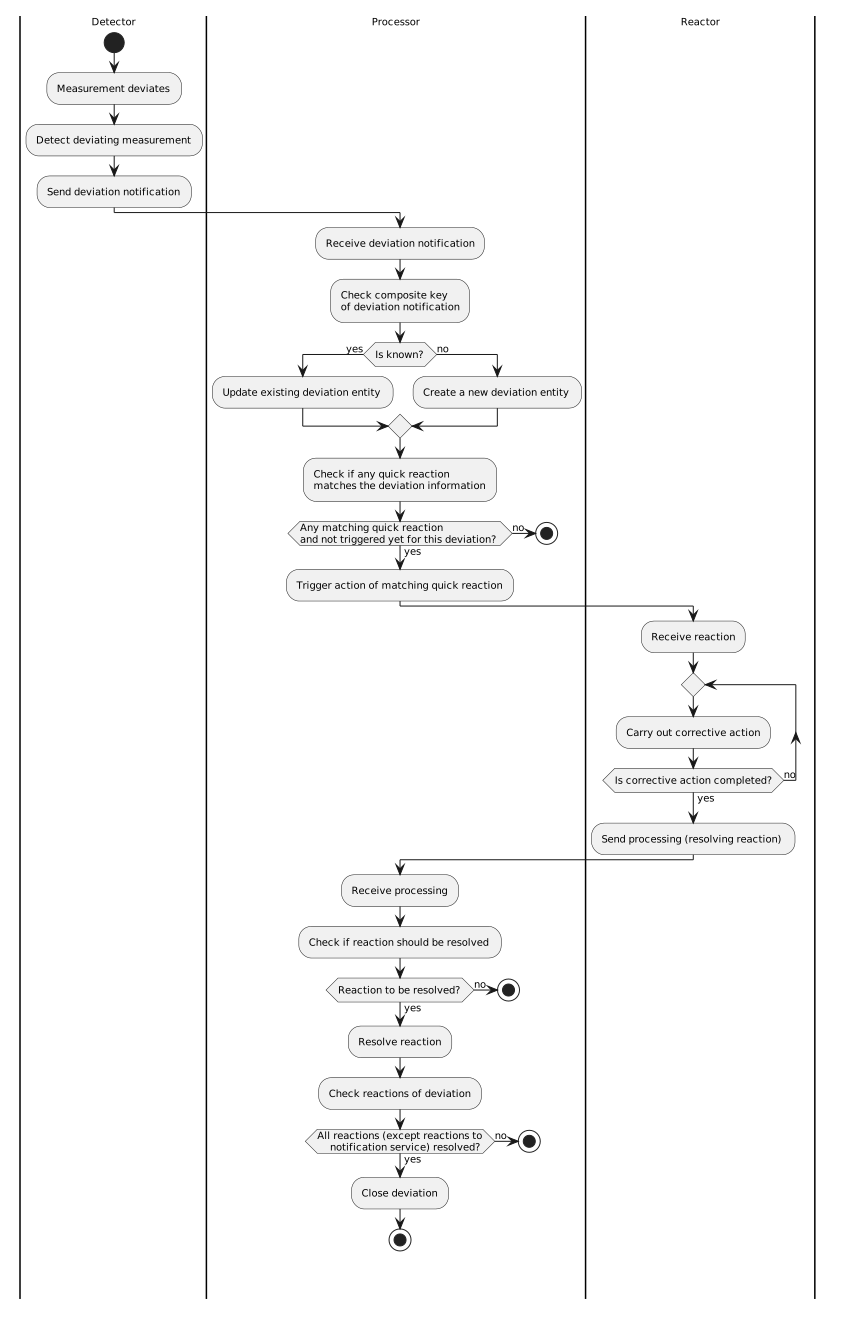
The Deviation Processor orchestrates the handling of deviations on the shop floor. The lifecycle of a deviation through the system can be modeled as follows:
images/Deviation-Flow

The process consists of four main sections:

  1. Detection of Deviations:

    • Deviations are detected by detector modules and reported to the Deviation Processor.

    • Reporting occurs through a standardized interface via a deviation notification.

  2. Storing and Reacting to Deviations:

    • Information from multiple deviation notifications with the same composite key—potentially from different detectors—is aggregated and stored as deviations in the central database of the Deviation Processor.

    • Reactions to these deviations can be triggered either manually through the user interface or automatically via Quick Reactions.

    • These reactions initiate necessary corrective actions to address underlying issues, such as dispatching a maintenance technician to replace defective parts.

    • Each matching Quick Reaction is only triggered once per deviation.

  3. Resolving Deviations:

    • Corrective actions are implemented to address the root causes of the deviation.

    • Once the corrective action is successfully completed, reactors resolve the reaction through a processing request.

  4. Closing a Deviation:

    • If all triggered reactions are resolved, the deviation is automatically closed.

Contents

© Robert Bosch Manufacturing Solutions GmbH 2023-2026, all rights reserved

Changelog Corporate information Legal notice Data protection notice Third party licenses