SOT
    • Introduction
    • Release notes
      • 2025.03.00
        • RC2
        • RC1
      • 2025.02.01
        • SP10
        • SP9
        • SP8
        • SP7
        • SP6
        • SP5
        • SP3
        • SP2
        • SP1
      • 2025.02.00
        • SP25
        • SP24
        • SP23
        • SP22
        • SP21
        • SP20
        • SP19
        • SP18
        • SP17
        • SP16
        • SP15
        • SP14
        • SP13
        • SP12
        • SP11
        • SP10
        • SP9
        • SP8
        • SP7
        • SP6
        • SP5
        • SP4
        • SP3
        • SP2
        • SP1
    • Getting started
      • Getting access
      • Login
      • Main screen
      • Welcome dashboard
      • Detecting process anomalies
      • Analyzing data and detecting event sequences
      • Analyzing KPIs
    • How-tos
      • Monitors on production lines
        • Configuring the automatic login in the Smart Operations Toolkit
        • Configuring the automatic login to the identity provider with the Windows user
        • Setting cookies in the browser
        • Configuring the automatic logout in the Smart Operations Toolkit
        • Configuring the command line parameters in the browser
        • Known limitations and troubleshooting
      • Try out the APIs
    • Integration guide
      • Underlying concepts
        • Underlying concepts
        • Onboarding
        • Security
        • Communication
      • Integration journey
      • Example integrations
        • Node-RED
        • Power BI
      • Overview of APIs
    • Operations manual
      • Release
      • System architecture and interfaces
      • System requirements
        • Cluster requirements
        • Database requirements
        • Support for service meshes
      • Migration from previous SOT versions
      • Setup and configuration
        • Deployment process
        • Deployment with Helm
        • Advanced configuration
        • Integrations with external secret management solutions
        • Context paths
        • Service accounts and authorizations
        • Validation tests
        • Setup click once
        • Database user setup and configuration
      • Start and shutdown
      • Regular operations
        • User management & authentication
        • How to add additional tenants
        • How to access the cluster and pods
        • Automatic module role assignments in customer tenants
        • User credentials rotation - database and messaging secrets
      • Failure handling
        • Failure handling guidelines
        • Ansible operator troubleshooting
        • How to reach BCI for unresolved issues
      • Backup and restore
      • Logging and monitoring
        • The concept and conventions
        • ELK stack
        • ELK configurations aspects for beats
        • Proxy setup for ELK
        • Health endpoints configurations
      • Known limitations
      • Supporting functions
      • Security recommendations
        • Kubernetes
        • Security Best Practices for Databases
        • Certificates
        • Threat detection tools
    • Infrastructure manual
      • Release
      • System architecture and interfaces
        • RabbitMQ version support
      • System requirements
      • Migration from previous SOT infrastructure versions
      • Setup and configuration
        • Deployment process of the SOT infrastructure Helm chart
        • Deployment with Helm
      • Start and shutdown
      • Regular operations
        • RabbitMQ
          • User management & authentication
          • Disk size change
          • Upgrade performance with high performant disk type
          • Pod management policy
      • Failure handling
        • Connection failures
        • Data safety on the RabbitMQ side
        • Fix RabbitMQ cluster partitions
        • Delete unsynchronized RabbitMQ queues
        • How to reach BCI for unresolved issues
      • Backup and restore
      • Logging and monitoring
      • Known limitations
    • Training
    • Glossary
    • Further information and contact
Smart Operations Toolkit
  • Smart Operations Toolkit
    • Deviation Processor
    • Multitenant Access Control
    • Notification Service
    • Ticket Management
    • Web Portal
  • Shopfloor Management
    • Andon Live
    • KPI Reporting
    • Operational Routines
    • Shift Book
    • Shopfloor Management Administration
  • Product & Quality
    • Process Quality
    • AI Services
  • Machine & Equipment
    • Condition Monitoring
    • Device Portal
  • Enterprise & Shopfloor Integration
    • Information Router
    • Master Data Management

SOT Learning Portal

  • Smart Operations Toolkit
  • Integration guide

Welcome to the Smart Operations Toolkit (SOT) Integration Guide

How cool would it be to give your idea to solve a problem in the industry 4.0 domain a head start? That’s exactly what we asked ourselves at Bosch as well and came up with a sophisticated set of software components that not only bridge the gaps between different software but also help building new one.
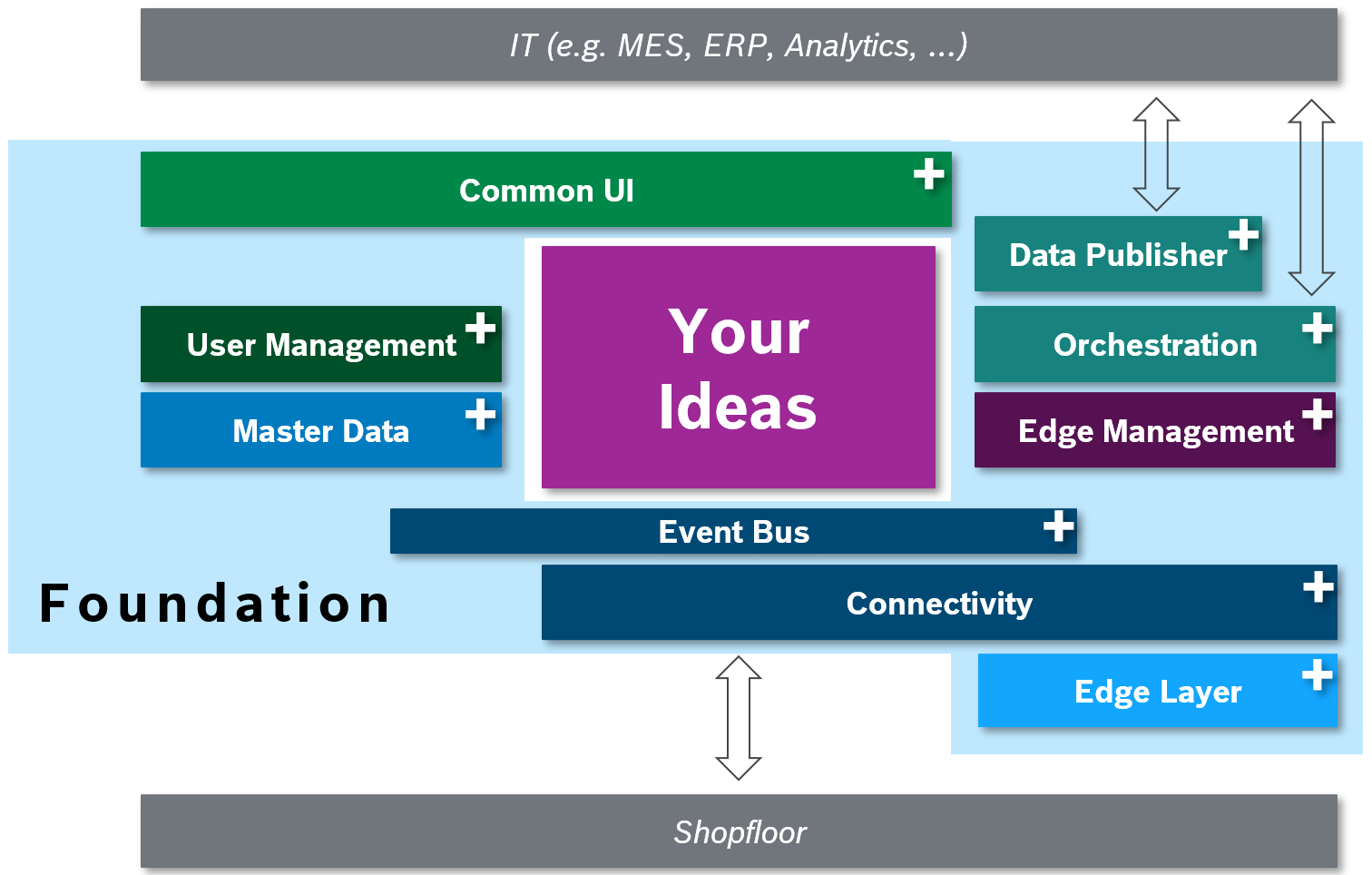
yourIdeaHere

This documentation aims at product owners, project managers and developers that want to make themselves familiar with the Smart Operations Toolkit (SOT) integration and development topic. You will find an overarching guide that helps you through the whole decision and integration process.

Underlying concepts

Self-Contained Systems, Iframes, Kubernetes - everything that you might need to know about how the system was designed and how it works

Concepts

Integration Journey

Develop your application with this step-by-step guide to achieve full integration

Integration journey

API overview

List of all APIs Smart Operations Toolkit offers

API list

© Robert Bosch Manufacturing Solutions GmbH 2023-2026, all rights reserved

Changelog Corporate information Legal notice Data protection notice Third party licenses